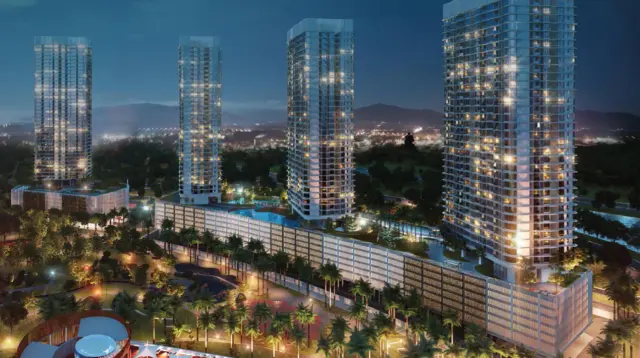
Setia Sky 88
Johor Bahru City Centre, JB, Johor
From 929K≈ RM 3,803 /month (90% loan est.)
Freehold · Serviced Residence · 505-1636 sqft · Studio-4+1 rooms
Below RM1m
Mainland China buyer guide
Malaysia is genuinely open to foreign ownership — freehold title in your own name, no nominee structure, no 40% foreign cap of the kind the Philippines applies. The hard part is not the Malaysian side. It is funding, and it deserves a straight answer rather than the vagueness most agents offer: the USD 50,000 annual individual foreign-exchange quota is a current-account allowance and China's rules do not permit it to be used to buy property abroad. Buyers who complete legitimately are using funds already held offshore, income earned and taxed outside China, or a formal immigration-linked channel — and all of those need qualified cross-border advice before you commit to anything.
You buy in your own name, on freehold or leasehold title, with no requirement to use a local company or nominee. Each state sets a minimum purchase price for foreign buyers — around RM1 million is the common baseline, with some states higher and a few zones lower — and every transfer needs state authority consent, which adds time. Closed to you regardless of price: Malay Reserve land, Bumiputera-quota units, and low- and medium-cost housing as defined by the state. Published state thresholds conflict between sources and are revised periodically, so confirm the figure for the specific state and property type before you commit rather than trusting a number in a sales deck.
Transfer stamp duty for non-citizens is now a flat 8% of property value for instruments executed on or after 1 January 2026, doubled from the previous flat 4% under the Finance Act 2025. On a RM1,000,000 purchase that is RM80,000 rather than RM40,000. Malaysian permanent residents are excluded from the higher rate, and commercial and industrial property are unaffected. On top of that: legal fees on the sale and purchase agreement, a second set of legal fees and stamp duty if you borrow, the state consent fee, and valuation and agency costs where they apply. Budget roughly 10-12% of the purchase price in transaction costs. Most Chinese-language articles about Malaysian property still quote the old 4% — if a salesperson quotes you that figure, it tells you how current their information is.
Every mainland resident may convert up to USD 50,000 per calendar year under SAFE's individual foreign-exchange facilitation quota. That quota is for current-account purposes — travel, study, medical treatment and similar. Overseas real estate is a capital-account item, and the rules do not permit the quota to be used for it. If an agent tells you otherwise, they are either misinformed or steering you somewhere you should not go. What legitimate buyers actually use: funds already lawfully held offshore, income earned and taxed outside China, or a formal immigration-linked channel. Each needs proper cross-border tax and legal advice, and your Malaysian solicitor will need documented source of funds before releasing anything. This page describes the rules; it does not describe ways around them, because those are illegal and the risk sits entirely with you. On borrowing: financing is harder for mainland buyers than for most other nationalities, and several banks decline non-resident applications depending on country of residence. Assume you may need to fund without a Malaysian mortgage, and treat any financing you do obtain as a bonus rather than the plan.
Holding costs are modest: council assessment rates, state quit rent, and for strata property the service charge and sinking fund contribution — on a facility-heavy condominium that last item is usually the largest recurring line, and it is the one buyers forget when they model a yield. Rental income earned in Malaysia is taxed in Malaysia at non-resident rates. Selling is where the arithmetic bites. Real Property Gains Tax for foreigners is 30% of the gain within the first five years and 10% from year six. A Malaysian citizen reaches 0% after five years; a foreign owner never does. Combined with 8% going in, a short hold is expensive at both ends. This is the honest reason to distrust anyone pitching a quick Malaysian flip to mainland buyers — the tax structure is built to reward holding, not trading.
Owning property is not a visa. MM2H is the long-stay route, tiered as a fixed deposit paired with a minimum property purchase: Silver from around USD 150,000 with a property from about RM600,000; Gold from around USD 500,000 with a property from about RM1,000,000; Platinum from around USD 1,000,000 with a property from about RM2,000,000. A separate cheaper route is tied to the special economic zone in Johor, where the qualifying property must be bought from a designated developer. Requirements have changed more than once — confirm current criteria before planning a purchase around a visa. Schooling is the reason a large share of mainland families look at Malaysia at all. There is a substantial international school sector, and separately a Chinese-medium school system with a long history here. The schooling post below covers how the two differ and what each actually costs, because the fee assumption people arrive with is usually wrong in one direction or the other.
Projects mainland buyers ask about most, including the Johor developments that come up in every conversation.
Johor Bahru City Centre, JB, Johor
From 929K≈ RM 3,803 /month (90% loan est.)
Freehold · Serviced Residence · 505-1636 sqft · Studio-4+1 rooms
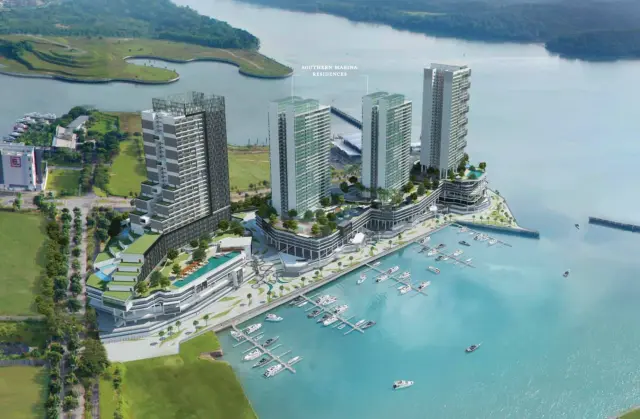
Medini, Iskandar Puteri, Johor
Contact for Pricing
Leasehold · Serviced Residence · 506 - 1,152 sqft · 1 - 3+1 rooms
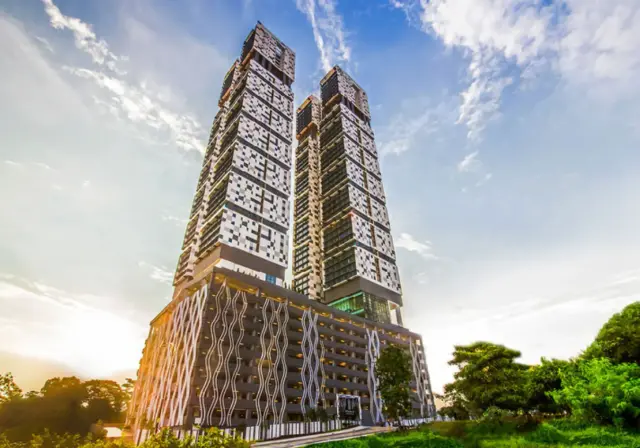
Puteri Harbour, Nusajaya, Johor Bahru, Johor
Contact for Pricing
Freehold · Serviced Residence · 769-3317 sqft · 1-4+3 rooms
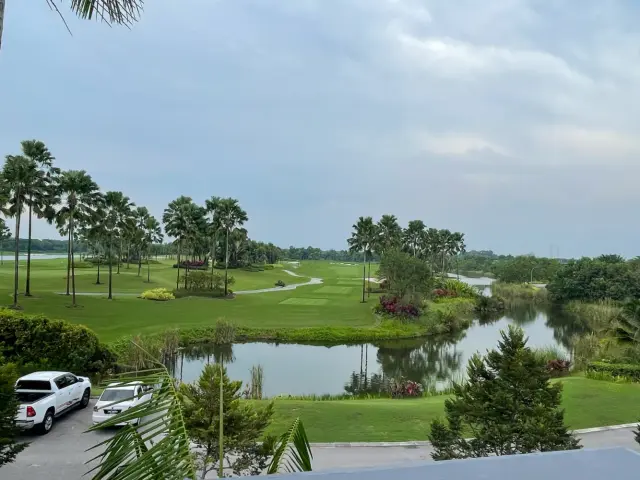
Forest City Golf Resort, Gelang Patah, Johor
From RM 1.1 million (V120)≈ RM 4,503 /month (90% loan est.)
Freehold · Landed · 2,034 - 2,917 sqft · 2 - 3 rooms
No. That quota is a current-account facilitation allowance for purposes such as travel, study and medical treatment. Overseas real estate is a capital-account item and the rules do not permit the quota to be used for it. Anyone telling you otherwise is either misinformed or pointing you somewhere illegal.
Yes — in your own name, and often on freehold title, with no nominee structure required. The limits are the state minimum purchase price, state consent, and the closed categories such as Malay Reserve land and Bumiputera-quota units.
Budget roughly 10-12% of the price. The largest single item is transfer stamp duty, which for non-citizens became a flat 8% of property value on 1 January 2026, doubled from 4%.
Real Property Gains Tax at 30% of the gain within the first five years, and 10% from year six onward. Foreign owners never reach 0%, so the exit is always taxed.
It is harder for mainland buyers than for many other nationalities, and some banks decline non-resident applications outright depending on your country of residence. Plan on the assumption that you may need to complete without Malaysian financing.
Send your budget, the city you are considering, and whether this is for living, renting out or holding. Lewis will come back with a shortlist and the numbers behind it.
Lewis replies in English or Mandarin. Malaysia time (GMT+8) — same-day reply on weekdays.

Scan to add Lewis on WeChat
WeChat ID: lewis0416