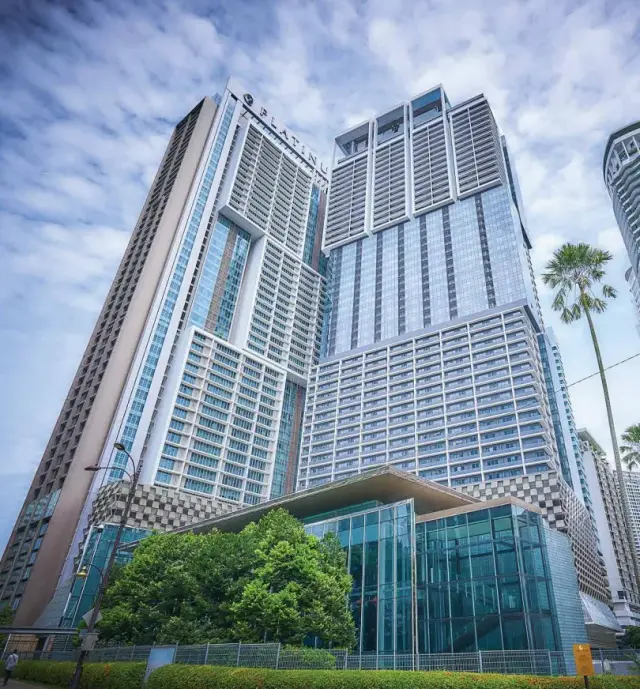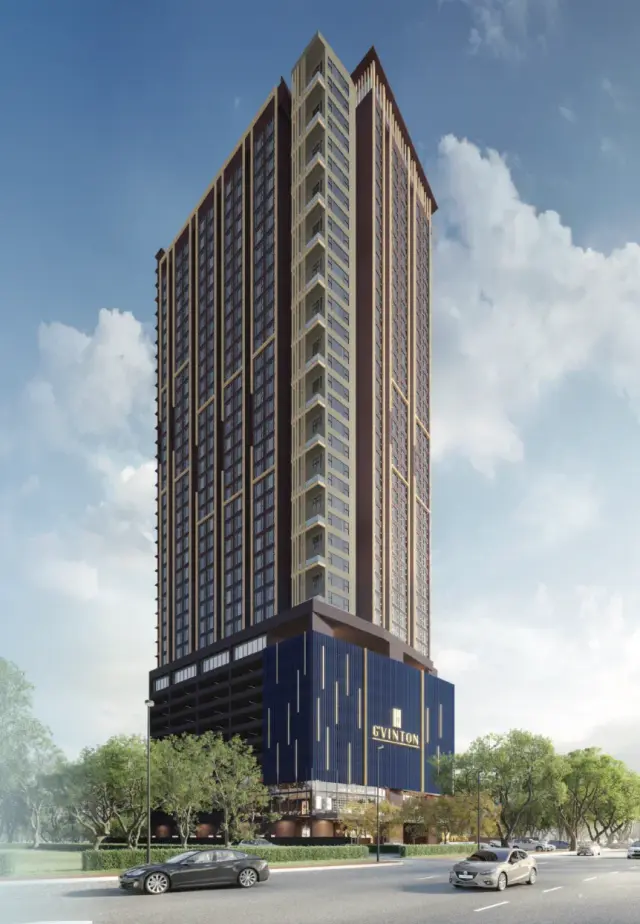

Divine KLCC @ Jalan Saloma
KLCC, Kuala Lumpur
From RM968,000≈ RM 3,963 /month (90% loan est.)
Freehold · Serviced Residence · 511 - 1,319 sqft · 1+1 - 3+1 rooms
Below RM1m
For Hong Kong Buyers
A Kowloon flat runs roughly HK$12,000–13,000 per square foot; the same money buys a freehold KLCC unit outright, or several units in Johor Bahru. That gap is real and it's the reason to look — but from 1 January 2026 foreign buyers pay a flat 8% stamp duty on transfer, Johor adds its own 3% state levy, and neither BNO status nor an apostilled Power of Attorney work the way most guides assume. Get the numbers right before the sales pitch does the talking.
Yes, without needing MM2H, a Malaysian spouse, or any visa beyond the standard 90-day visa-free entry HKSAR passport holders already get. Any foreigner can buy Malaysian residential property above the applicable state minimum price — commonly RM1,000,000 in Kuala Lumpur, with other states setting their own thresholds that vary and, in places, run higher for landed housing — subject to State Authority consent, a process your conveyancing lawyer handles that typically takes 1–3 months. The Foreign Investment Committee that once gated these purchases was disbanded in 2009; today the operative approval sits with the state, not a federal committee. BN(O) passport status carries no special weight here — Malaysian immigration treats a BNO holder identically to any other HKSAR passport holder.
At the exchange rate on 12 August 2026 — roughly HK$1 to RM0.52, or RM1 to HK$1.92 — a Kowloon psf of around HK$12,500 converts to roughly RM6,500 per square foot. Nowhere in Malaysia does pricing come close to that, even at the most expensive addresses. The most expensive branded freehold towers in central Kuala Lumpur sell in the RM2,450–3,000 psf range; standard KLCC stock runs roughly RM1,500–2,200 psf; Johor Bahru mass-market and prime waterfront stock transacts anywhere from roughly RM550 to RM1,300 psf. Always convert at the live rate on the day you're deciding, and always ask for a NAPIC-referenced transacted price rather than a developer's asking psf — the gap between the two in Johor has, in some projects, run to 20–30%.
| Location | HK$ psf | RM psf equivalent |
|---|---|---|
| Kowloon / New Territories (Class A, <40 sqm) | ~HK$12,300–12,800 | ~RM6,400–6,650 |
| KLCC — freehold branded towers | n/a | RM2,450–3,000 |
| KLCC — standard freehold/leasehold | n/a | RM1,500–2,200 |
| Johor Bahru — mass-market to prime waterfront | n/a | RM550–1,300 |
Neither side imposes a capital control that blocks this. Hong Kong has no exchange controls — the HKD is freely convertible and pegged to the US dollar — and Bank Negara Malaysia places no restriction on non-residents remitting funds in to buy property, or repatriating sale proceeds, rental income or profits back out later. The friction sits entirely with the banks' own anti-money-laundering obligations: expect your Hong Kong bank, under the AMLO framework, to ask for a documented source of funds (bank statements, salary evidence, or a sale agreement if funds came from another asset) before releasing a large transfer, and the receiving Malaysian bank to run its own due diligence under Malaysia's AML/CFT laws. Build this documentation before you make an offer, use only licensed banks or remittance channels, and initiate any large transfer with a real buffer ahead of your SPA's payment deadlines.
From 1 January 2026, non-citizen buyers (permanent residents excluded) pay a flat 8% stamp duty on the transfer of residential property, double the previous 4% — introduced via the Finance Act 2025 (Act 874) as Item 32(ab) of the Stamp Act 1949's First Schedule. Add legal fees on the Solicitors' Remuneration Order 2023 scale (1.25% on the first RM500,000, 1% on the balance to RM7,000,000, plus 6% SST), and, if you're buying in Johor, the state's own foreign-buyer levy of 3% of the price or RM30,000, whichever is higher, since 1 July 2025. On exit, Real Property Gains Tax charges a foreigner 30% of the chargeable gain within the first five years, dropping to 10% from year six — but unlike a Malaysian citizen, a foreigner's RPGT never reaches zero. On the Hong Kong side, there is no capital gains tax and no stamp duty payable on a foreign property purchase, though you should confirm with a cross-border tax adviser how any Malaysian rental income or gain is treated for Hong Kong tax purposes given your specific residency status.
| Cost item | Rate | Approx. amount |
|---|---|---|
| Stamp duty on transfer (foreigner, flat) | 8% | RM120,000 |
| Johor state foreign-buyer levy | 3% or RM30,000, higher applies | RM45,000 |
| Legal fees (SPA + MOT, SRO 2023 scale + 6% SST) | ~1.25%/1% + SST | ~RM17,225 |
| RPGT on exit within 5 years (on gain, not price) | 30% of chargeable gain | Never 0% for foreigners |
These are two unrelated products solving two different problems. BN(O) is a UK immigration route: eligible Hong Kong status holders can live, work and study in the UK on the well-known '5+1' path to British citizenship. It has no legal bearing on your status in Malaysia — a BNO passport holder gets the same 90-day visa-free entry as any HKSAR passport holder, nothing more. MM2H is Malaysia's long-stay visa, rebuilt in 2024 into three tiers: Silver (USD150,000 fixed deposit, 5-year visa, RM600,000 minimum property), Gold (USD500,000, 15 years, RM1,000,000 property) and Platinum (USD1,000,000, 20 years, RM2,000,000 property), plus a lower-threshold Special Economic and Financial Zone category. MM2H is not required to buy property — only for long-stay residency — and it doesn't lead to Malaysian citizenship. You can hold both BN(O) and MM2H simultaneously; they're assessed by entirely separate governments and neither helps nor hurts the other.
Hong Kong to Kuala Lumpur is a direct 4-hour flight on Cathay Pacific or AirAsia, connecting efficiently to the city via the 30-minute KLIA Ekspres rail link. There is no practical direct flight to Johor Bahru's own airport — routings run well over 15 hours via a third city — so a Johor-focused trip is faster and more predictable via Singapore Changi (about 3h45min direct from Hong Kong) and then crossing the Woodlands Causeway, one of the world's busiest land borders. Crossing time varies enormously: 20–30 minutes off-peak midweek, well over an hour during 6–9am/5–8pm rush hours or weekend afternoons. Budget a minimum two-day trip for Johor, one day for KL.
There's no school-net system here — Malaysian international schools admit on their own criteria, not residential zoning, so property location affects commute time, not admission eligibility. Iskandar Puteri in Johor is built around Marlborough College Malaysia (fees roughly RM41,400–126,000/year, ~890 students, 43 nationalities) and Repton International School. KL's market is larger: Nexus International School Malaysia's 2026/27 fees run RM46,050–104,490, alongside Garden International School, EtonHouse and others clustered mainly around Mont Kiara, Bangsar and the wider Klang Valley. A 6% SST applies to school fees above RM60,000/year since July 2025. Test the actual school-run drive at the actual drop-off time before committing to a unit — map distance is a poor proxy for peak-hour reality in both Johor and the Klang Valley.
Hong Kong's average gross rental yield was around 3.55% in Q1 2026; Malaysia's national average sits near 5.27%, with KL condos typically at 4–6% and Johor Bahru at roughly 5.5–6.25% gross — though maintenance fees, quit rent, assessment tax and realistic vacancy generally bring the net figure closer to 4–4.5% in Johor. On Forest City specifically: its Special Financial Zone status (gazetted September 2024) brings genuine tax incentives for family offices and financial services firms, but independent estimates still put residential occupancy across completed towers at roughly 15–30% — improving, not solved. Medini's historic foreigner-purchase exemption on strata units exists but is being tightened case by case; confirm the current status with IRDA before assuming it applies to your unit.
A starting shortlist across the three markets Hong Kong buyers most often compare: KLCC and Mont Kiara in Kuala Lumpur, Bukit Senyum and Puteri Harbour in Johor Bahru, and George Town in Penang — verified projects, not a generic 'top picks' list.
KLCC, Kuala Lumpur
From RM968,000≈ RM 3,963 /month (90% loan est.)
Freehold · Serviced Residence · 511 - 1,319 sqft · 1+1 - 3+1 rooms
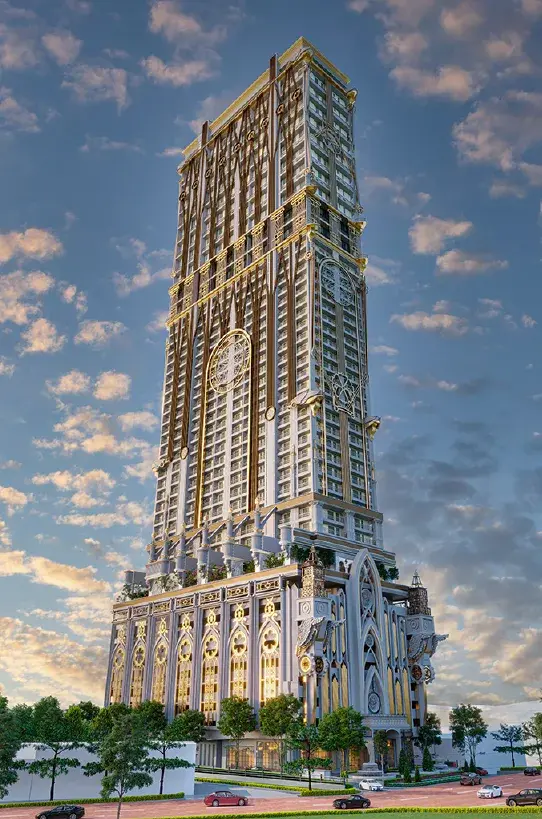
KLCC, Kuala Lumpur
From RM886,500≈ RM 3,629 /month (90% loan est.)
Freehold · Serviced Residence · 528 - 2,455 sqft · 1 - 4 Bedrooms rooms
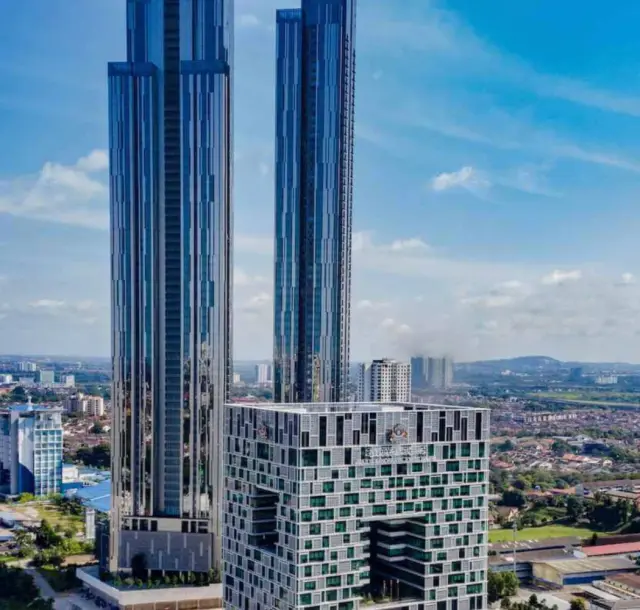
Mont Kiara, Kuala Lumpur
RM 543K-1.9M≈ RM 2,223 /month (90% loan est.)
Leasehold · Serviced Residence · 477-2051 sqft · 2-3 rooms
Bukit Senyum, Johor Bahru, Johor
Contact for Pricing
Freehold · Serviced Residence · 2,207 - 2,659 sqft · 3 - 4 rooms
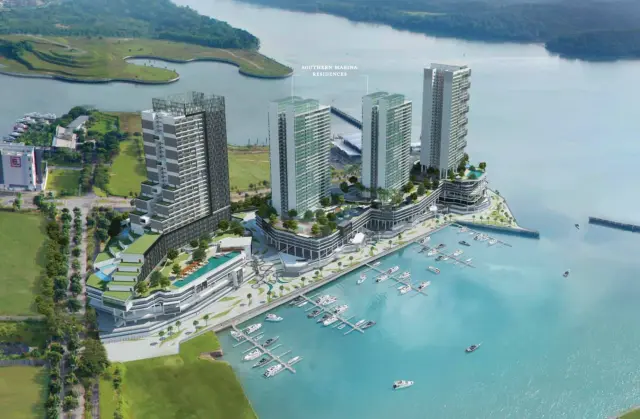
Puteri Harbour, Nusajaya, Johor Bahru, Johor
Contact for Pricing
Freehold · Serviced Residence · 769-3317 sqft · 1-4+3 rooms
George Town, Penang
From RM560,000≈ RM 2,292 /month (90% loan est.)
Freehold · Serviced Residence · 387 - 1,356 sqft · 1-3 rooms
Yes, using a Power of Attorney to let a Malaysian lawyer sign on your behalf. But because Malaysia has not yet acceded to the Hague Apostille Convention that Hong Kong belongs to — accession has been reported as being in its final stages, so confirm the current position — a Hong Kong apostille alone is typically not sufficient today — you'll usually need full consular legalisation through the Malaysian Consulate-General in Hong Kong instead.
Yes — it's law, introduced through the Finance Act 2025 (Act 874) as Item 32(ab) of the Stamp Act 1949's First Schedule, applying to residential transfer instruments executed on or after 1 January 2026. It doubled from the previous flat 4%.
No. Malaysian immigration treats a BNO passport holder identically to any other HKSAR passport holder — the same 90-day visa-free entry, the same State Authority consent process, no special property or visa privilege.
No — any foreigner on a standard visa can buy above the applicable state minimum price with State Authority consent. MM2H is only required if you want long-stay residency, not for ownership itself.
Hong Kong's gross yield runs around 3.55%; Malaysia's national average is closer to 5.27%, higher in Johor Bahru. But Malaysian yield carries maintenance fees, quit rent, assessment tax and vacancy risk that bring the net figure closer to Hong Kong's than the headline gap suggests.
Send your budget, the city you are considering, and whether this is for living, renting out or holding. Lewis will come back with a shortlist and the numbers behind it.
Lewis replies in English or Mandarin. Malaysia time (GMT+8) — same-day reply on weekdays.