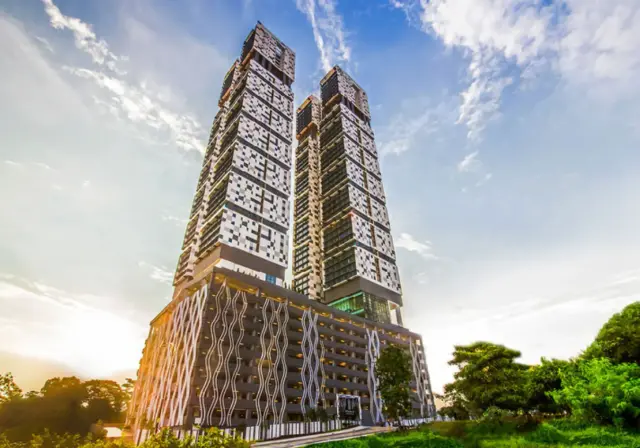
Twin Tower Residence
Bukit Chagar, Johor Bahru, Johor
Contact for Pricing
Freehold · Serviced Residence · 559-1,216 sqft · Studio-3 rooms
Ready-viewing buyers
Philippine buyer guide
The strongest reason for a Filipino buyer to look at Malaysia is ownership itself. At home, foreigners cannot own land, and condominium projects are subject to a 40% foreign-ownership ceiling. In Malaysia you buy in your own name, frequently on freehold title, with no foreign quota on the building. What you pay for that openness is a state minimum purchase price, state consent, and a cost base that rose this year — transfer stamp duty for non-citizens doubled to a flat 8% on 1 January 2026. Weigh it against Metro Manila on yield and total cost, not on headline price alone.
The Philippine constitution reserves land ownership to Filipino citizens and to corporations at least 60% Filipino-owned, and condominium projects are capped at 40% foreign ownership. That is the frame most Filipino buyers arrive with, and it is why Malaysia's position surprises them. In Malaysia a foreign buyer takes title in their own name, on freehold or leasehold, with no per-building foreign quota. The constraints are different in kind: each state sets a minimum purchase price for foreign buyers — commonly around RM1 million, with variation by state and zone — and the transfer needs state authority consent. Malay Reserve land, Bumiputera-quota units and state-defined low- and medium-cost housing are closed to foreigners regardless of price. So the trade is real but it is not like-for-like: Malaysia gives you stronger ownership at a higher entry price. Whether that is worth it depends on what you would otherwise buy at home.
Transfer stamp duty for non-citizens is a flat 8% of property value for instruments executed on or after 1 January 2026, doubled from the previous flat 4% under the Finance Act 2025. On a RM1,000,000 purchase that is RM80,000. Malaysian permanent residents are excluded, and commercial and industrial property are unaffected. Add legal fees on the sale and purchase agreement, a further set of fees and stamp duty if you borrow, the state consent fee, and valuation and agency costs where they apply. Plan on roughly 10-12% of the purchase price in transaction costs. Against Metro Manila, compare on the full picture rather than headline price: entry cost including this stamp duty, the ringgit-peso rate at the time you buy, realistic gross yield after service charges, and what it costs you to fly back and deal with a problem in person.
Remitting from the Philippines to Malaysia is routine, and Filipino households are among the world's most experienced at cross-border transfers. The considerations are cost and traceability rather than permission: compare the all-in cost of the channel you use, and make sure funds arrive into your Malaysian solicitor's client account through a route you can document, because source-of-funds evidence is part of completing the purchase. Currency is the risk people underweight. Your income is in pesos and the asset, the loan and the rent are in ringgit. A yield that works at one rate can look quite different two years later, and rental income in ringgit does not adjust to protect a peso-denominated household budget. On borrowing, Malaysian banks lend to foreign buyers on non-resident terms — lower margin of finance, shorter tenure, and income documentation that satisfies a Malaysian credit committee. Some decline non-residents depending on country of residence. Get an indicative position before paying a booking fee.
Holding costs in Malaysia are council assessment rates, state quit rent, and for strata property the service charge and sinking fund contribution. On an amenity-heavy condominium the service charge is usually the biggest recurring cost and the one that quietly erodes a headline yield. Rental income earned in Malaysia is taxable in Malaysia at non-resident rates. On disposal, Real Property Gains Tax for foreigners is 30% of the gain within the first five years and 10% from year six onward. A Malaysian citizen reaches 0% after five years; a foreign owner never does. With 8% payable on the way in, the structure rewards holding and punishes a quick sale — which is worth knowing before anyone pitches you a short-term flip.
Filipino readers usually know the Special Resident Retiree's Visa at home, so MM2H is easiest to understand by contrast. MM2H runs in tiers pairing a fixed deposit with a minimum property purchase: Silver from around USD 150,000 on deposit with a property from about RM600,000; Gold from around USD 500,000 with a property from about RM1,000,000; Platinum from around USD 1,000,000 with a property from about RM2,000,000. A separate cheaper route is tied to the special economic zone in Johor, where the qualifying property must be bought from a designated developer. The structural difference worth noting is that MM2H tiers currently require a property purchase as part of the programme, whereas the SRRV has historically been deposit-led with property optional. Requirements on both sides have been revised more than once — confirm current criteria before building a plan around either. And as everywhere else on this site: buying property does not by itself give you the right to live in Malaysia. Ownership and immigration are separate questions.
Projects Filipino buyers ask about most, across Kuala Lumpur and Johor.
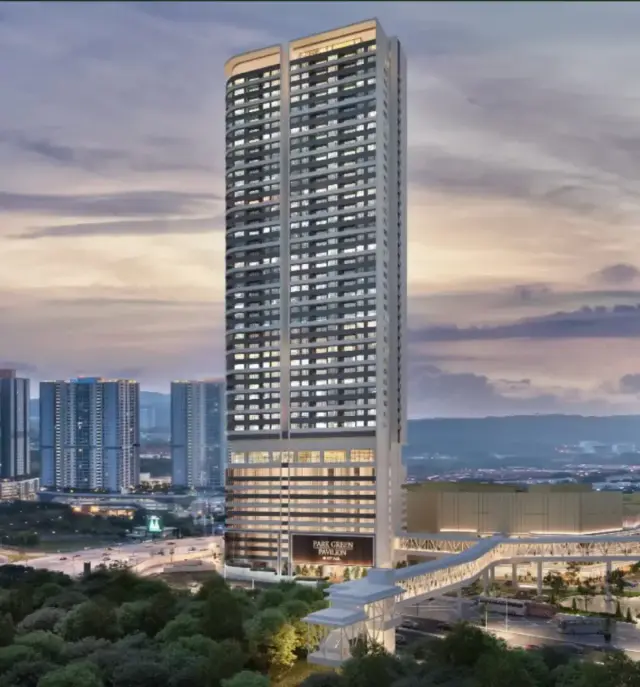
Bukit Chagar, Johor Bahru, Johor
Contact for Pricing
Freehold · Serviced Residence · 559-1,216 sqft · Studio-3 rooms
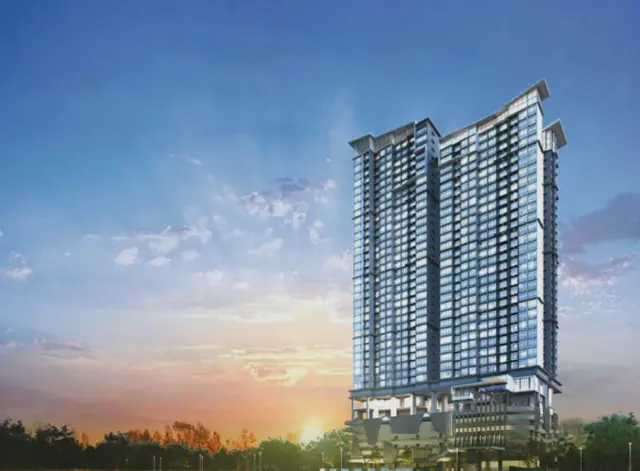
Johor Bahru City Centre, JB, Johor
From 929K≈ RM 3,803 /month (90% loan est.)
Freehold · Serviced Residence · 505-1636 sqft · Studio-4+1 rooms
Bukit Jalil, Kuala Lumpur
RM1.29M- RM2.04M≈ RM 5,281 /month (90% loan est.)
Freehold · Serviced Residence · 1200-1900 sqft · 3 rooms
Bukit Jalil, Kuala Lumpur
RM 300K≈ RM 1,228 /month (90% loan est.)
Freehold · Condominium · 808-816 sqft · 1-2 rooms
Yes, in your own name, and frequently on freehold title. There is no per-building foreign ownership cap of the kind the Philippines applies to condominiums. The limits are the state minimum purchase price, state authority consent, and closed categories such as Malay Reserve land.
At home you cannot own land at all, and condominium projects are capped at 40% foreign ownership. In Malaysia you take title directly with no foreign quota on the building — but you must meet the state's minimum price for foreign buyers, which is typically far above an entry-level Philippine condo.
Roughly 10-12% of the price. The biggest item is transfer stamp duty, a flat 8% for non-citizens from 1 January 2026, doubled from 4%.
MM2H tiers currently pair a fixed deposit with a minimum property purchase, while the SRRV has historically been deposit-led with property optional. Both have been revised more than once, so confirm current criteria before planning around either.
Currency and distance. Your income is in pesos while the asset and rent are in ringgit, and being far away makes management problems slower and more expensive to fix. Budget for both before you compare yields with Metro Manila.
Send your budget, the city you are considering, and whether this is for living, renting out or holding. Lewis will come back with a shortlist and the numbers behind it.
Lewis replies in English or Mandarin. Malaysia time (GMT+8) — same-day reply on weekdays.